
Fig. 1. Ferraro, Cari. Obama Makes History.
After the 2008 election, the United States would have its first black president: Barack Obama. Talk of equality and racial divide spread across the country like wildfire. Had this election signified that America had finally become “post-race”? Or was this just a minor stepping stone to a post-racial America?
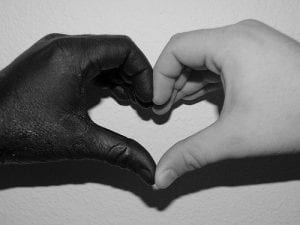
For America to be “post-race,” it would mean we have entered a period in which racial prejudice and discrimination no longer exist. Individuals would treat each other equally, no matter the color of their skin. Communities would be full of diversity and would have a culture in which everyone is represented and respected. In a way, it would mean America has gone colorblind. To be a truly colorblind country, there could be no discrimination in the workplace, no more hate crimes, no more discrepancies in jail time for different races, and the list goes on. Is this really possible, and furthermore, have we done it?
The answer is a simple no.
While this may seem pessimistic, it seems to be almost impossible to create a post-racial America. During his farewell speech in Chicago, Obama himself said “race remains a potent and often divisive force in our society.”
And it does.

Fig. 2. CNN Guest.
Racism is still very prevalent in America. Some could say it has gotten worse in the past few years. In the current political climate, racism seems to be a repetitive issue. Story after story of innocent African-Americans being killed by white Americans are found reported in the news. And time after time, white Americans are given less sentencing when it comes to being jailed for their crimes. One of the most famous and recent cases has been the trial of Brock Turner, a white male who was given a lenient punishment after being convicted for rape. He was given a mere 6 months in jail, falling extremely short of the 6 years the prosecution asked for. The public has been outraged with this sentencing, blaming it on his “white male privilege” that got him out of the time he deserved.
Even our current president, Donald Trump, has had is fair share of racial comments, including disparaging Mexican immigrants as criminals and rapists. There is what seems to be an endless list of the president attacking minorities. From claiming all immigrants from Haiti have AIDS to accusing Obama of being born in Kenya, Trump has made it clear that he does not see all races equally. How can we be in a post-race society when our own president still inhumanely judges people based on the color of their skin?
Ta-Nehisi Coates from The Atlantic has a beautifully interesting perspective on a post-racial America. He describes, “We should seek not a world where the black race and the white race live in harmony, but a world in which the terms black and white have no real political meaning.” Why should it even matter if someone is black, white, green, or blue? The thing that matters is we are all human. We all look the same underneath. So what’s the point? What’s the point of treating someone differently just because they have more melanin than you? When it comes down to that, it seems kind of silly that race is such a divisive factor in America. Yet it still is.

Fig. 3. Coates, Ta-Nehisi. There Is No Post-Racial America.
However, people around the country are working for a better and more equal America. Between the national Black Lives Matter movement to simple demonstrations in small colleges, people want to be treated equally and want others to be treated equally too. People are hopeful of the incoming generation. This generation could be the catalyst we need to get passed all the current terrible things we see in the news, and bring forth a period of equality and progress.
Unfortunately, there might always be that Asian kid who gets picked on for a mere genetic difference. There might always be a Latino told to go back to a country he has never even been to. And there might always be people who do not like our 44th president solely on the basis that he is black.
These things will always exist. The important thing is that we never stop working to eradicate them. We can never give up on that distant hope that maybe one day we will reach a post-racial America. We may not get there completely, but we can always educate and stand up for others to work towards a truly equal society.
Despite its impossibility, becoming “post-race” represents an ethical framework we should promote. Obama stated that racial inequality has diminished since 30, 20, even 10 years ago. He spoke of how you can see it in the attitudes of the next generation. He ended his thoughts saying: “But we’re not where we need to be. And all of us have more work to do.”
So let us keep working and never stop.

July 23, 2024 at 9:25 am
This was a fantastic article! The practical tips and detailed explanations were very helpful.