
Attached is a pdf of my Issue Brief Draft. The document is currently 1500 words.
Attached is a pdf of my Issue Brief Draft. The document is currently 1500 words.

Accessible Access to Education at Penn State
I think that overall, my deliberation went well (I saw you were in attendance, thank you for being there!). I think that one of the things that I did well was keeping the conversation going despite a small group being present. I think that my whole group did a really good job of keeping an open mind throughout the discussion and I also feel as though my group was extremely well educated on the topic and their personal approach, which really helped the group in approaching people’s logistical questions and helped us frame the introduction in a way that made sense to people.
However, there are some things that I think I would have changed if I had the chance to do the deliberation over again. I think that I definitely would have double-checked that all of the videos were accessible before the presentation. I trusted a member of my group to do it and even asked them to make sure that the video was seeable days before, I should have personally checked that the video they uploaded was viewable. Since there was a whole debacle with presenting the video and needing to have one of our group members orally present the slides, I was embarrassed that it looked like our group wasn’t prepared after I had put so much effort into my parts of the project. I was disappointed with that also because as they were trying to fix the video, I was forced to carry the conversation by myself and the rest of the group as a whole didn’t ask as many questions as I wished they had because I asked the majority of the questions.
This leads me to my second shortcoming: I have trouble letting go of the reigns in group projects because I am a perfectionist. After the group exercise the class did with recognizing the type of group member you are, I’ve been more aware of my behavior in groups and I think I typically get stressed trying to gain too much control. I did a good job stepping back during the research and preparation of this project, though I felt myself begin to “steamroll” during the presentation, and though I could use the lost video as an excuse, I felt so uncomfortable by the silence of the room that I continued to talk when I maybe should’ve given others a few more seconds to see if they wanted to add anything else.
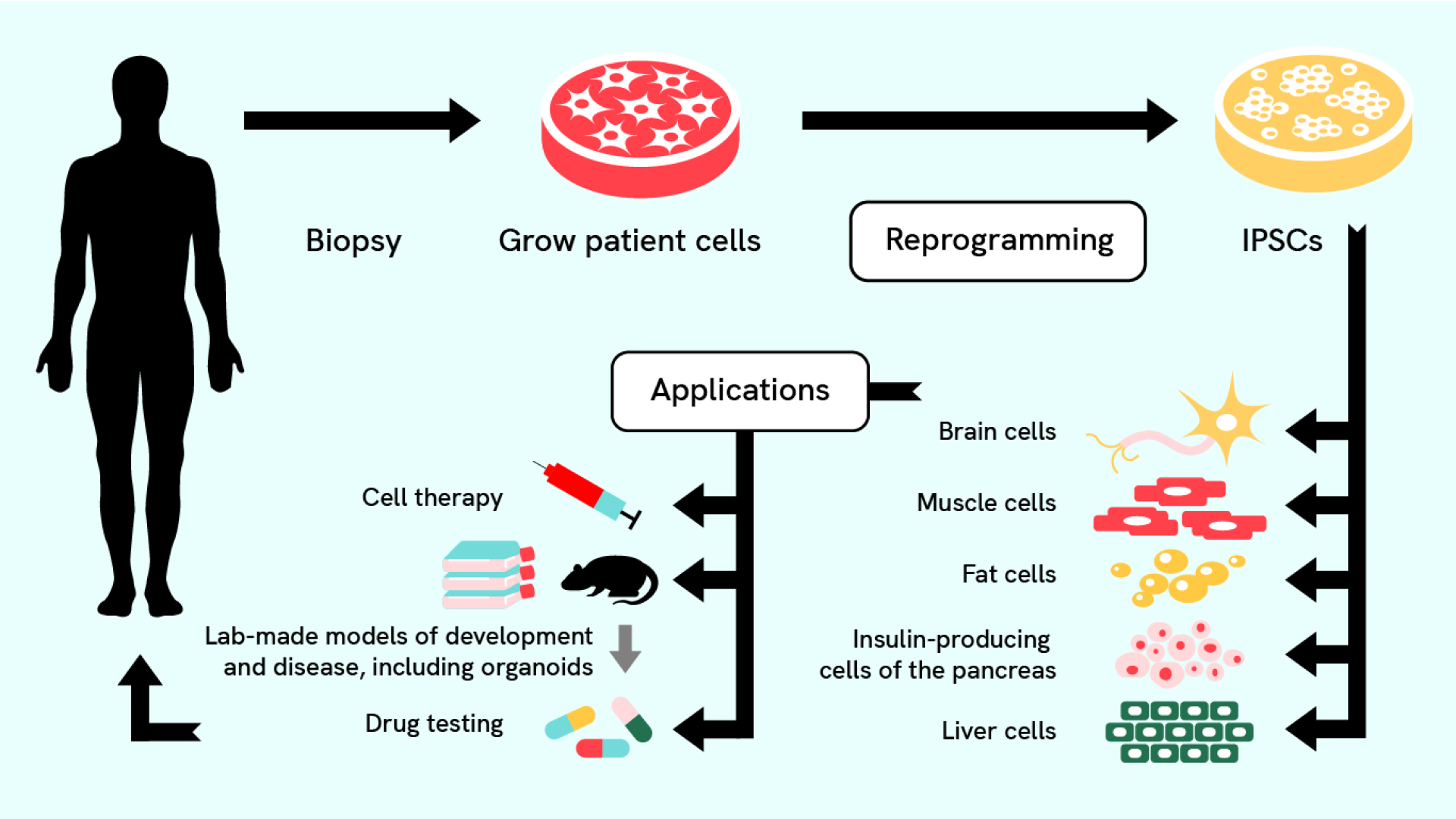
What are stem cells?
The topic I have chosen for my Civic Issue is the subject of Stem cell research. This is a very widely contested issue, and it is important to be aware of the facts and various perspectives on the subject. In the modern age, technology tends to develop faster than people can keep up. People are struggling to keep in stride with new available resources, one topic that is not excluded from this fast innovation is stem cell research.
Stem cells are the cells from which all other cells with specialized functions are generated. It is easy to picture stem cells as blank canvases, which are later drawn on and assigned specialized cell tasks. For example, a stem cell could become a neuron, a blood cell, a muscle cell, or even an epithelial cell. It is difficult to imagine that something as small as a cell could have the capability to do any bodily function in our bodies. We only receive one set of DNA and that DNA codes for every gene in our genome. Since humans are complex eukaryotic organisms, their cells have an ability called differential gene expression. Different types of cells have different activated coding regions of DNA, which code for individual proteins that serve a purpose that assists the specialized cell in its function.
Stem cells have specialized abilities. By researching stem cells, researchers gather a better understanding of how tissues and organs develop. This research allows society to better understand how conditions and diseases develop. Many people will benefit from stem cell research. According to the Mayo Clinic, patients with spinal cord injuries, type 1 diabetes, Parkinson’s disease, lateral sclerosis, Alzheimer’s, heart disease, stroke victims, burns, cancer, osteoarthritis, and so many more will benefit from more knowledge surrounding stem cells.

Benefits of stem cells
Stem cells can be used to not only understand how diseases develop and progress, but also in a process called regenerative medicine. The process of regenerative medicine is complicated. Stem cells can also be used to test drugs. Since stem cells can be programmed into specific cells, they are used to test new drugs in many cell type categories like neurons, stomach, liver, and muscle cells.
Opposition to stem cell use
Despite the positive outcomes that are possible from researching these pre-developed cells, there is much controversy surrounding their research. To retrieve stem cells, they must be taken from embryos. Many people are against the use of stem cells due to their ethical concerns and have ethical qualms with the use of the use of unborn babies in early development, believing that embryos have the same rights as adults. President Bush dubbed the practice as “the taking of an innocent human life” because it prevents the normal, intended development of a baby. Later, in 2009 President Barack Obama removed the restrictions that President Bush placed on the federal funding for stem cell research.
The other objection many have to stem cell research is that the world is in the very early stages of understanding how stem cells work and implementing their qualities into patient treatment too fast without fully understanding or informing patients of the possible danger to patient health.
How the Debate Impacts Society
The debate of this issue stems from one that is when human life begins. When a life starts and when the potential of a human being is solidified is highly contested by many in the modern age.
This topic is crucial to civic life because so many people in society would benefit from the research of stem cells, however, many contest over whether the research of stem cells is ethical. While the benefits of using stem cells is great, many believe that there is no ethical basis behind the practice. It is extremely important to develop lawful practices around stem cell research in order to regulate the speed at which technology is developing.
Obviously, there are many contradicting opinions about the use of stem cells in research. Peter Singer, a philosopher specializing in the topic of euthanasia, Successfully describes how the left views the potential of a zygote. He often stresses the distinction between being a “human” and being a “person.” Peter Singer categorizes a “human” as a biological homo sapien. Labeling a person as someone with bodily autonomy and the potential to feel complex emotion is categorized as a “person”. The traits that a person holds are what gives their life so much value compared to an animal, or another organism lower is complexity. This is the belief that many, particularly left-wing citizens, believe.
On the right-wing side of politics, many share the belief that life is created the moment the sperm reaches the fetus, giving the fetus potential the moment it is fertilized and becomes a zygote.

My thoughts on the issue of stem cell research
In my opinion, I think that the use of stem cells to research diseases and conditions should be permitted in the United States due to the extremely promising potential they hold, however, I believe that the research and access that researchers have to stem cells should be regulated and heavily controlled by the law. I think that the government should have struct rules that stem cell researching companies must follow about the access they have to the stem cells and the type of research they are allowed to perform with the cells. I think that abortion plays a large role in the shaping of this issue, and I believe that many women who abort their embryos would be willing to donate stem cells before.
I truly believe that stem cells will make extremely crucial contributions to our civic life. I think that the way the issue of stem cell research has been so tightly bound with politics is what is creating such a polarized sphere regarding embryo research. I think that in order for this civic issue to be addressed, people must look past their political alignment, seek out information about how stem cell research will impact society, and make conclusions based on that research. This issue is so complex, and I think an answer as pro or con does not do the topic justice.
References
This I Believe Speech – Effie Frank
[transition to MP B]: I simply couldn’t see what architects called “the vision.” That was, until I began to see through past the rubble.
[signal closure]: After spending time in the new house and exploring its potential, I changed my outlook my belief in my father’s magnum opus.
For my passion blog, I want to explore how beauty standards have changed throughout history. I am interested in researching what made standards of the time change and the types of messages those standards sent to society, primarily towards women. I want to explore how a word like beauty can be defined when it is constantly changing and such a subjective topic. I’m interested in taking a dive in the types of influences on beauty, from mythology, to male gaze, to social media. I feel as though I may struggle to find a brand new message for each blog.
For my civic issues blog, I really struggled with choosing a topic that not only interested me, but was also unique and not overdone. Similar to the topic of women’s reproductive rights, the civic issue that I want to explore is the topic of stem cell research. This is a highly contested issue, and a complex one. I really wanted to make sure that I connected my interest in bioethics with the issue, and I think this is a perfect example of bringing philosophical questions of how far scientists should be able to test the boundaries of ethicality. I am curious to see multiple points, including the overall effect of the research of human embryos on society.
For my this “This I Believe” speech, I think that I want to talk about how I believe in the existence of “magnum opus.” A magnum opus is an important work of art, music, or literature. It is seen as a masterpiece; something that the creator was put on the earth to make. I believe that we are all set on the earth with the potential to create a magnum opus, and very few fulfil their prophecies. I’ve come into contact with many magnum opuses in throughout my life: the “Mona Lisa” in the Louvre, “The Great Gatsby” by F. Scott Fitzgerald, and even Michelangelo’s work in the Sistine Chapel, but I’ve never come into contact with a person in the process of the creation of their masterpiece until this last year, when my dad took on a project: to renovate a cabin at the top of the highest hill in Mars, PA from the ground up. If I choose this concept, I will go into greater detail about how my experience with my father and how he realized that this was what he was put on the earth to do.
For another “This I Believe” speech idea, I was thinking about my advanced art class from high school and how we were tasked with the challenge of putting boundaries on the definition of art. I think that “I Believe in Fine Art” could be a good topic of how I came to define what I personally think art is. I have a story about times that I debated my personal beliefs and other times that I conceded to beliefs that were not my own. All of these events came together to outline how I see fine art. In my speech I hope to go through some of my opinions.
For my passion blog, I was thinking about unpacking the messages sent to children through the toys that are advertised to them. Children are very heavily influenced and kids toys sway what children believe (for good or for worse). I want to unpack certain toys and discuss how they are molding the minds of the youth.
For my second passion blog idea, I was thinking about writing about how beauty standards have changed over time. I think that the beauty standards reflect the values of society at the time and those messages may display the values of society at a period in time.
I think for one of my civic issue blogs I want to talk about female rights to bodily autonomy. I think that this is a really important issue in modern day and clear action can be taken to solve this issue in civic society.
Another idea I had for my civic issue is the fact that the United States is in $34 trillion in debt. I think that very clear action needs to be taken, including a decrease in the amount of taxpayer dollars going towards the military budget. Although I am not exactly sure of how to decrease national debt and it is a complex issue, it is one that must be addressed.
One thing that I learned while watching the video from Thursday was that although this is a project about the history of a controversy, Professor O’Hara thinks that the tone should be bright and fun to keep the audience entertained.
Professor O’Hara also mentioned the idea of music. She made a comment about how editing should be consciously making an effort to prove a point. For example, if music is playing for the sake of just being in the background, it should be removed.
She also mentioned the fact that the topic didn’t need to be as narrow of alcohol tax and human safety, and that it could be broader. O’Hara also mentioned framing the controversy by using historical events and making it broader than the example from the New York Times.
I really liked that professor O’Hara brought her dog 🙂

I think that my TED talk went well. I feel embarrassed that it took so many tries to find the topic that stuck. I was glad that I reserved a time in a private study room to record my TED talk because being in one environment for so long and just having a big time block to finish everything is good. I’m currently in the process of finishing my essay and making sure that everything is right with my video and I plan on submitting tomorrow night. I was glad to get plenty of takes. I think that maybe I spent too much time scripting the video and it’s also possible that I included too many photos that require explanation. I think that finding my sources went very well I found myself being surprised by the breadth of the database that the Penn State Library has access to and I think that I really got to know the resources of the library through this project. I haven’t been able to look at the TED talks of other people yet because the project is not due yet.
Some ideas that my group had during out brainstorm session about the History of Public Controversy Project were…
Overall, our group had a lot of ideas, but we’re having trouble committing to one right now.
Slides listed below…
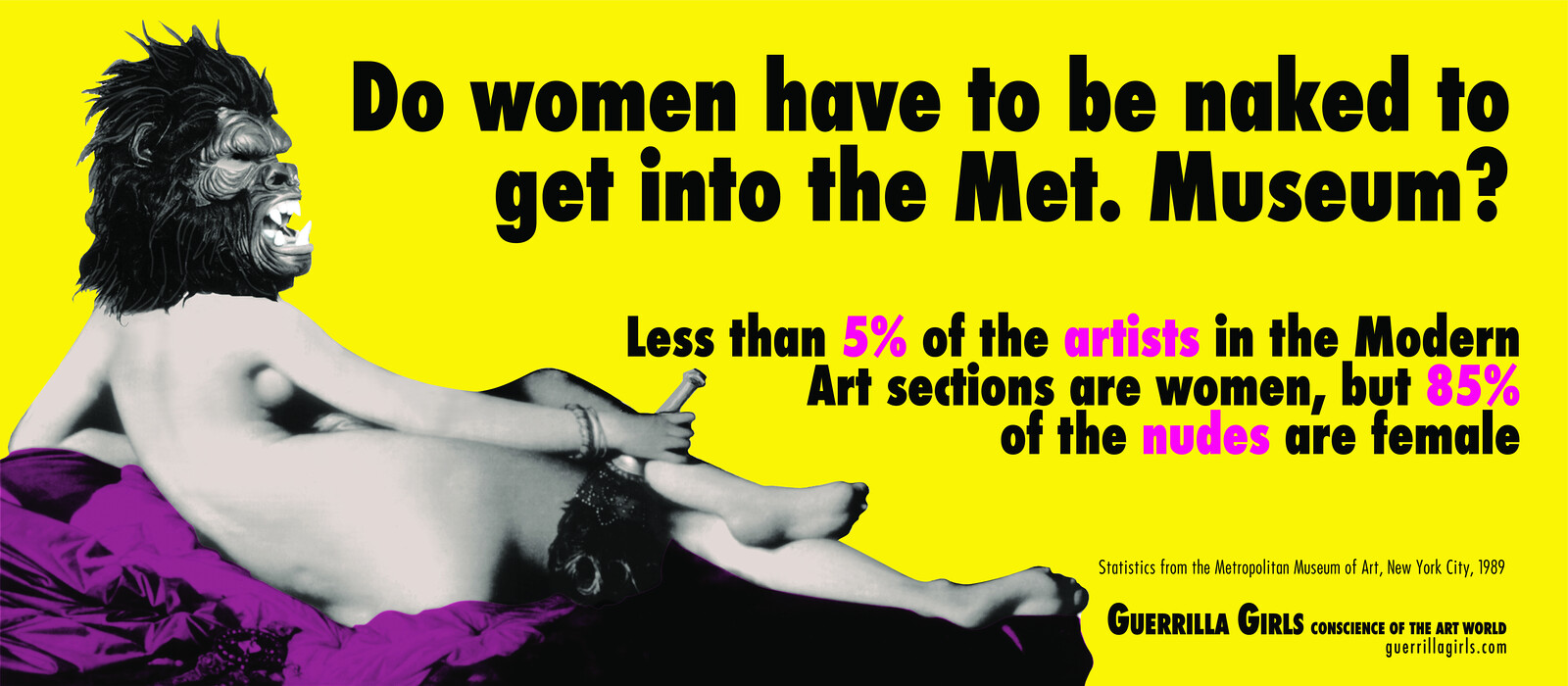
When I was developing these slides, I was definitely highlighting the idea of simplicity. I chose all white slide and put the paintings on it with the purpose to explain the development of femininity from the muse to the painter, explaining how women became more vocal about representing what womanhood meant to them over time. After seeing the TED talks in class, I’ve decided that I should add more elements to them to engage the audience more.

I felt as though my original idea was hard to explain and define, and after the elevator pitch, I want to ensure that my paradigm shift directly relates to civic life, so I’m now choosing to talk about women in art.
I am going to use pieces of art created by women as my paradigm shifts to demonstrate how art reclaimed femininity and redefined female representation from 1893 to 1989, setting up future art to accurately portray women. I plan on using The Child’s Bath (1893), Black Iris (1921), Self-portrait with thorn necklace (1940), Dinner Party (1974), and Do Women Have to be Naked to Get Into the Met. Museum? (1989).
The primary source that I will be using is the “Women’s art journal” from the library which is a peer reviewed journal. I plan to use this source to pinpoint specific pieces that were significant to female representation in art. This book dives into more contemporary art, and how it defied the traditional control of men. https://www-jstor-org.ezaccess.libraries.psu.edu/stable/e27095950
Another source that I found that I think will positively improve my paper is called “Women’s work: from feminine arts to feminist art” by Ferren Gipson which is a novel in the library that I am going to check out. https://catalog.libraries.psu.edu/catalog/38672277.
Another book that I found from the university database is “Art and Feminism” by Helena Reckitt. I am primarily interested in Peggy Phelan’s interpretation of the art of women and the shifting of the ideas of feminism in art. I want to explore the role of femininity in multiple moments in time. https://catalog.libraries.psu.edu/catalog/2195481.
“Art and Feminism: Twenty-First Century Perspectives” is a journal article written by Jacqueline Millner, Catriona Moore, and Georgiana Cole. I’m going to utilize this source to demonstrate how art will continue to evolve after the period of time that I am reviewing and how the works of art that I looked at influenced further development. https://www.tandfonline.com/doi/full/10.1080/14434318.2015.1089816.
Overall, I think that I will look for more sources that support my argument from the specific time period of the paradigm shifts (artworks) I am reviewing.