Upon Steve Jobs’ return to Apple in 1996, the company was struggling big time. It was even predicted that Apple would be no more. They needed to do something special, something outside the box to get the company back on board. They had to “think different.”
To this day, Apple’s “Think Different” campaign remains one of the most monumental moments in advertising history. The stock price of Apple tripled in twelve months. “Think Different” literally saved Apple, but how?
The ads had nothing to do with Apple’s products and everything to do with the company’s missions. The video shows various influential people in history such as Albert Einstein, Martin Luther King, Bob Dylan, and Amelia Earhart. The video is also entirely in black and white. Once again, this is to further emphasize the company’s values. They did not want it to be flashy, but instead genuine and in line with their beliefs.

The narration says, “Here’s to the crazy ones… the only thing you can’t do is ignore them, because they change things. They push the human race forward.” The video is a call to action containing ridiculous amounts of inspiration. They put in videos of these influential people to help guide that inspiration. The reason it’s in black and white is to reflect on how simple their new slogan is. All the people in the videos had to think in a new way to get to where they were. They were called crazy for being different. Apple loves to “think different” of course, but they love the innovation that comes with it.
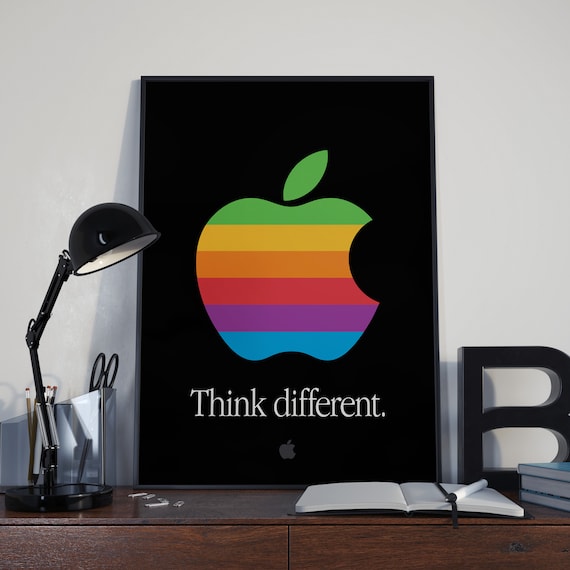
So yes, Apple was done. Their company would fade and disappear from existence, and they couldn’t do anything about it. The world laughed at their products and even called their computers “toys.” Apple made the decision to not back down. They had a fantastic advertising team that truly reflected the company and its values. They chose to “think different” and because of that, Apple climbed the ranks to one of the most successful companies in history.
This was such a good example of a rhetorical situation artifact, and it also reminds me of the Women in Sports Nike advertisement we watched the other day in class, especially with the montaged clips of successful and iconic people. Using influentially historical people such as Martin Luther King, Ghandi, Bob Dylan, and many more all represent a force of power and possibility that Apple is trying to replicate in their products. The black and white look of the advertisement does keep things simple and straight to the point, which is also useful in not trying to distract the audience with gaudiness or “over-the-top” design. Seeing where the company is today (and I did not know of this advertisement before), it’s pretty clear that the rhetorical strategies they used worked to their benefit and kickstarted a pretty big technology revolution.
John,
I like your use of not just one but two photos because they really helped break up the text. In addition, I think that you did a really good job at adding a new perspective and analysis of the campaign that people probably would not recognize at first. I think it would be interesting to see you develop a deeper analysis on how this campaign continues to affect modern society today.
Sophia
Hi John,
Great topic, I think late 90s early 00s Apple is very interesting and I always wanted to look into it more ever since I had a school research project on Steve Jobs. The format for this post is also really good and easy to read. This commercial must have been the pivotal point where Apple decided to turn things around for themselves, and here they are now, at the very top. Great work!
Ameya