• Log In
 Visit the Pennsylvania State University Home Page

OLEAD 410: Leadership in a Global Context

Cultural Leadership blog

Blog 2 Global Leaders Learning in Response to Change

Global leaders learning in response to change has been the focus in the last eighteen months.  With restrictions in movement, breakdowns in supply chains, shutdowns in countries, it has been nearly two years of learning and pivoting.  Many companies have also had expanded opportunities that they did not have two years ago.  When the entire world shift to an online experience, companies had to pivot as well and create an online presence, or they would be devastated by companies like Amazon that could deliver to a home in house.  Nearly a quarter of companies saw their sales fall more than fifty percent since the pandemic began (Tracking an unprecedented year for businesses, everywhere 2021).  The IBM Institute for Business Value noted that executives’ top priorities have shifted dramatically on customer retention, workforce safety and cost management (Covid-19 and the future of business 2020).

Due to the pandemic and panic buying havoc is being seen in the global supply chains.  Factories are shut down due to COVID, parts and supplies are impossible to get, worker shortages are everywhere.  Even when supplies are able to be shipped, they can’t make it into port.  In September 56 cargo ships were stuck off the coast of California, unable to get into port while they deal with the 140 ships already there (Kay & Towey 2021).  The California ports in Los Angeles not only account for one third of the US imports but also are the primary source of imports from China (Kay & Towey 2021).

The Head of the Adecco Group, which is a Swiss company is quoted as saying “As countries begin to emerge from the worst effects of the pandemic, a picture of those that have been successful in mitigating the labor market and economic impact is appearing. In broad terms, countries that responded more quickly with economic support and helped employees stay in the work process as much as possible are showing better prospects” (Clift & Court 2020).

It goes beyond keeping the doors open and customer retention/acquisition.  Many of these Global Leaders have committed millions of dollars to combat the COVID crisis.  Coca-Cola donated three million for front line workers in the Philippines, Chevron seven million to fight the disease globally and Amazon gave one hundred million for food banks (Seetharaman & Gallucci, 2020).  These companies are doing something beyond what is expected for company survival.  The global economy shrunk by 4.4% in 2020 which is the worst decline since the Great Depression what these business leaders are doing is much needed relief to these counties (Jones 2021).

While the focus of the past eighteen months has been how to we stay afloat, leaders now need to focus on where we go from here.  This pandemic is not going away any time soon and has changed the world in many ways.  Times of meeting face to face, shopping in stores are fading away and if businesses can’t account for that they will fade away as well.

References

Clift, K., & Court, A. (2020, March 23). Covid-19: How companies are responding. World Economic Forum. Retrieved September 30, 2021, from https://www.weforum.org/agenda/2020/03/how-are-companies-responding-to-the-coronavirus-crisis-d15bed6137/.

Covid-19 and the future of business. IBM. (2020). Retrieved September 30, 2021, from https://www.ibm.com/thought-leadership/institute-business-value/report/covid-19-future-business.

Jones, L. (2021, January 24). Coronavirus: How the pandemic has changed the World Economy. BBC News. Retrieved September 30, 2021, from https://www.bbc.com/news/business-51706225.

Kay, G., & Towey, H. (2021, September 14). An all-time high of 56 cargo ships are stuck waiting off the California coast, as shipping ports hit their 4th record backup in three weeks. Business Insider. Retrieved September 30, 2021, from https://www.businessinsider.com/shipping-delays-china-supply-chain-record-ships-stuck-california-ports-2021-8.

Seetharaman, M., & Gallucci, J. (2020, April 17). How global 500 companies are responding to COVID-19. Fortune. Retrieved September 30, 2021, from https://fortune.com/2020/04/13/global-500-companies-coronavirus-response-covid-19-pandemic/.

Tracking an unprecedented year for businesses, everywhere. World Bank. (2021, February 21). Retrieved September 30, 2021, from https://www.worldbank.org/en/news/feature/2021/02/17/tracking-an-unprecedented-year-for-businesses-everywhere.

Managing Organizational Change: Lewin & Schein

Managing Organizational Change: Lewin & Schein

By Amelia Young | April 7, 2020

In today’s fast-paced, ever-evolving world of business, change is inevitable, and the most successful organizations are adept at managing change through the development of effective change strategies. However, “most global leaders believe managing organization change is a serious challenge [yet a significant] part of corporate life” (Moran, Abramson, Moran, 2014, p. 282).

Organizational change requires that group members adapt their behaviors to meet changes in the environment. Firms able to adapt often thrive while those that resist change struggle to remain competitive. Transformational leaders play an important role in effecting organizational change as this leadership style is “a process where ‘leaders and their followers raise one another to higher levels of morality and motivation’” (Mindtools, n.d., p. 1). Studies have shown that transformational leaders “coordinate with employees, share their knowledge, [and provide] opportunity in making decisions in [sic] organizational level” (Hussain et al., 2018, p. 126). Global leaders first must “accept that change is a way of life [and that organizations] are changing all of the time” (Moran et al., 2014, p. 283). For leaders to effectively facilitate and lead organizational change, they must be unbiased and open-minded, possess strong strategic and planning skills, be capable team builders, and be strong communicators.

Global leaders must have a purpose and vision of the change, commit to and communicate that vision, create rewards to acknowledge when employees embrace and are empowered by the change, and then model the behaviors and attitude they expect (Moran et al., 2014). Motivating employees toward excellence can be particularly complex and challenging for global leaders, but is never-the-less, a task they must undertake if they are to successfully lead their organizations.

All leaders should understand that developing a strong change strategy is a critical factor in successful change. An action plan is necessary for each phase of the change process. Global leaders working in a multicultural environment must have a broad understanding of the “motivations for resistance, differences in employee/management perceptions, and the importance of ongoing communication” (Moran et al., 2014, p. 283) within their workforce and must include cultural considerations when developing the plan.

One of the most relevant change management models in history is Lewin’s Three-Stage Model of Change, which was developed by physicist and well known social scientist Kurt Lewin in the 1940s. Lewin’s change model has been used widely as the theoretical foundation for modern change models, including Edgar Schein’s planned change theory. Schein, who is a respected expert in the field of organizational culture, says that “‘in most organizational change efforts, it is much easier to draw on the strengths of the culture than to overcome the constraints by changing the culture’” (as cited in Vliet, n.d., p. 1). MNE leaders working in China, or any multicultural environment, who understand this are better able to develop change strategies because they design those strategies from the perspective of the culture in which they operate.

Lewin's 3-Stage Model of Change

Image source: Hattangadi (2016)

Lewin’s model “requires prior learning to be rejected and replaced” (Wirth, 2004, p. 1). Schein’s theory “is a slightly more detailed version of Lewin’s (1952) change management model, as it is one of the most widely accepted and supported by empirical evidence” (Pennsylvania State University, 2020, p. 3).

Schein’s theory is based on Lewin’s change model, so organizational leaders must understand the three-stages: Unfreezing, changing, and refreezing. Lewin’s model can be “described using the analogy of changing the shape of a block of ice. To change a solid square block of ice to a cone, you have to first melt the square block, reshape the water and then refreeze it to form the new solid shape” (Worsley, Mann, Olsen, & Mason-Whitehead, 2013, p. 130). Lewin’s model represents a simple yet practical model for understanding the process of organizational change.

Schein’s (1999) theory considers that “whether at the individual or group level, [change is a] profound psychological dynamic process [involving] painful unlearning [and] difficult relearning as one cognitively attempt[s] to restructure one’s thoughts, perceptions, feelings, and attitudes” (p. 59). For this reason, MNE leaders must carefully consider their change strategies from the cultural perspective of their workforce.

Unfreezing – This first stage of change management involves motivating group members to recognize the need for change. Three mechanisms must be addressed, including disconfirmation, creating discomfort, and creating psychological safety (Pennsylvania State University, 2020).

Disconfirmation “is the process of showing organizational members that their current behaviors or attitudes are incorrect and that continuing to behave in those ways will not only harm the organization but themselves as well” (Pennsylvania State University, 2020, p. 3). This step makes employees aware that existing behaviors and attitudes are no longer acceptable.

The next mechanism requires leaders to motivate group members to want to change their behavior by creating discomfort, that is, a level of anxiety or guilt. The first mechanism, disconfirmation, merely helps group members see that existing responses are wrong, but not that they need to change. These primary two mechanisms raise awareness among group members that a problem exists in the organization that requires changing if the company and its employees are going to succeed (Pennsylvania State University, 2020).

The last mechanism in the unfreeze stage is creating psychological safety. Although this is a step sometimes overlooked, it is crucial that leaders complete this final step. Psychological safety requires leaders to present to group members positive solutions to existing problems and show members that the new behaviors and attitudes will eliminate their discomfort. Leaders must offer a positive and achievable end goal that is more appealing to group members than the current level of pain (Pennsylvania State University, 2020).

For change to be possible, leaders must complete all three mechanisms involved in stage 1, the unfreeze stage of organizational change. Most people have a natural tendency to resist change, and unless they feel discomfort will not be motivated to change. Transparent communication is critical. Employees have to understand the proposed change, why it is needed, and how the change will benefit them. If the workforce is not motivated to change, the leader will struggle to create the change successfully. Motivating the employees can be particularly challenging for global leaders working with multicultural workforces. The idea is that the more we know about a change, and the more we feel it is necessary and urgent, the more motivated we are to accept the change. It is also essential to understand that there is a fine line between acceptable levels of discomfort and too much. If a leader creates too much distress, group members will leave (Pennsylvania State University, 2020).

Changing – At this point, members of the organization should be sufficiently motivated and ready to alter their behaviors and attitudes to embrace the desired change. There are two mechanisms required to move forward toward change, including identification, which involves social learning, and scanning the environment (Pennsylvania State University, 2020).

Identification requires members to work with a change agent to help integrate the new attitudes and behaviors. The change agent should be a respected member of the organization and should possess both responsibility and authority (Hussain et al., 2018). At this stage in the change process, leaders identify the knowledge change agents need to share, which would include “information, task relevant ideas and suggestions between different levels of management” (p. 125).

Successful implementation of organizational change requires leaders to scan the environment. Knowing what information is being distributed from areas beyond the organization’s official communication is a crucial step sometimes overlooked by leaders. Leaders must recognize that communication from organization leaders is not the only source of information available to group members. Other sources of information can include peers, other group members, supervisors, family, and friends, or any number of different sources. When members seek additional information or opinions from sources other than the organization’s leader, they may hear contradicting information. For example, a veteran employee may not have been adequately motivated, therefore not on board with the change. This person may express discontent with the organizational change and be convincing that change is not necessary. The official message from the organization is only one source of information. Ensuring that stage one, the unfreezing stage, has been successful is vital. If it has not, leaders should go back and work again to create motivation for the change, as it will be “easier to control the message if everyone sees the need for change in the first place” (Pennsylvania State University, 2020, p. 4). If leaders are not successful in adequately motivating group members toward the change, resistance to their desired change is likely.

Refreezing – The refreezing stage is the point where the new desired behavior and attitudes are solidified and become the new norm. The refreezing step involves two mechanisms; fit to self-concept and whether significant others will accept and confirm the changes (Pennsylvania State University, 2020).

Fit to self-concept relates to testing the change to be sure the new behavior and attitudes fit individuals. Testing should be conducted in a safe environment, which means that there should be no negative consequences for failure and that the person continues to be supported. MNE leaders must ensure that the behaviors and attitudes become the new standard and norm within the group. There are times when individuals accept and display changed behaviors and beliefs, but over time regress to the old norm. To minimize the risk of this regression, leaders must ensure the environment remains positive and supportive (Pennsylvania State University, 2020).

The last phase of the refreezing stage is about ensuring that significant others within the company will accept the new behaviors and attitudes. The organization itself must provide support by ensuring the necessary resources are available, which can include access to technology or people. For example, if a group member requires access to a senior-level leader but that access is blocked, the new behavior and attitude will not stick.

The Schein theory and Lewin’s model of change are not the only models or methods available related to organizational change, but these are tried and true models that create an excellent foundation for MNE leaders to address organizational change from a multicultural perspective.


References

Friedman, M. (2017). A theory that matters: Lewin’s three phases of organizational change. [Image]. Retrieved from http://www.mitchellfriedman.com/2017/11/a-theory-that-matters-lewins-three.html

Hussain, S.T., Lei, S., Akram, T., Haider, M.J., Hussain, S.H., Ali, M. (2018). Kurt Lewin’s change model: A critical review of the role of leadership and employee involvement in organizational change. Journal of Innovation & Knowledge, 3/3. 123-127. Retrieved from https://www.sciencedirect.com/science/article/pii/S2444569X16300087

Mindtools. (n.d.). Transformational leadership: Becoming an inspirational leader. Retrieved from https://www.mindtools.com/pages/article/transformational-leadership.htm

Pennsylvania State University. (2020). Leadership in a global context – OLEAD 410. Lesson 5: Learning and change in a global setting, Penn State World Campus. Retrieved from https://psu.instructure.com/courses/2041071/modules/items/27977845

Schein, E.H. (1980). Organizational psychology. Englewood Cliffs, NJ: Prentice-Hall.

Schein, E. H. (1999). Kurt Lewin’s Change Theory in the Field and in the Classroom: Notes Toward a Model of Managed Learning. Reflections, 1(1), 59–74. Retrieved from http://web.b.ebscohost.com.ezaccess.libraries.psu.edu/ehost/pdfviewer/pdfviewer?vid=1&sid=96365494-40be-49ef-b245-e8d0f2d682cc%40pdc-v-sessmgr01

Vliet, V.v. (n.d.). Edgar Schein. Retrieved from https://www.toolshero.com/toolsheroes/edgar-schein/

Worsley, A., Mann, T., Olsen, A. & Mason-Whitehead, E. (Eds.) (2013). The SAGE key concepts series: Key concepts in social work practice London: SAGE Publications Ltd doi: 10.4135/9781473914988. Retrieved from http://sk.sagepub.com.ezaccess.libraries.psu.edu/books/key-concepts-in-social-work-practice/n29.xml

Organizational Change for Mental Health Among Public Safety Professions

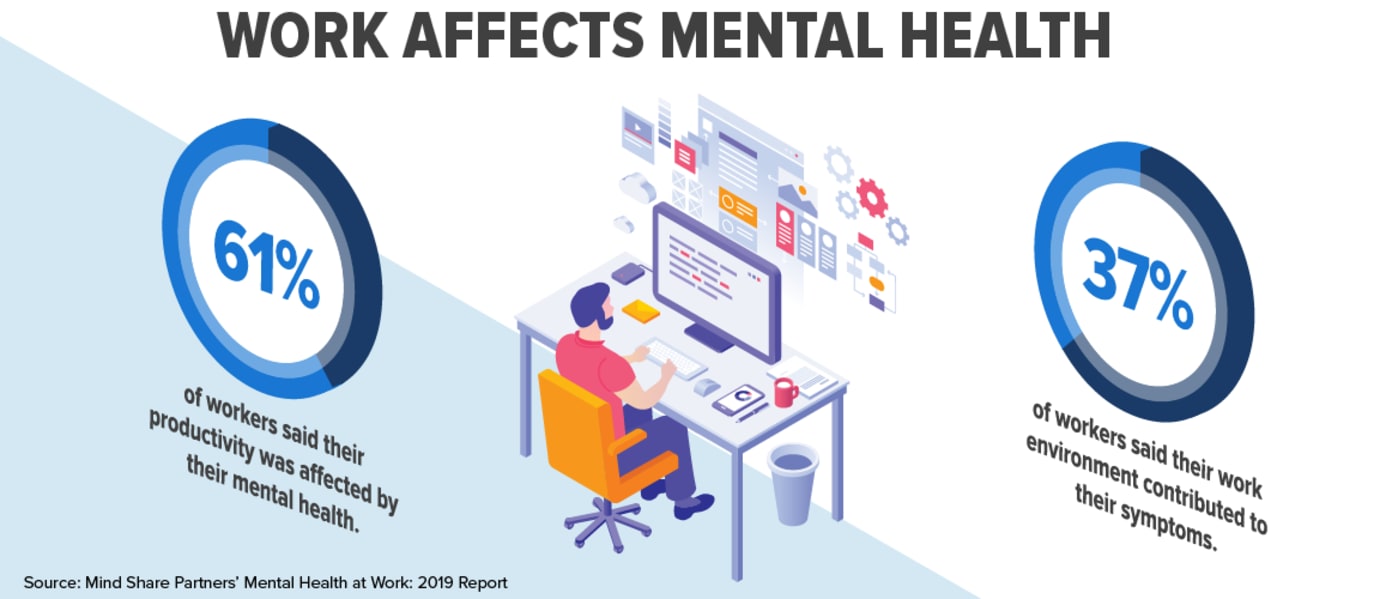
Organizational change is something every business should work towards, rather it is keeping up with the changes of technology or the changes in improving mental health within an organization. Mental healthy is a talked about discussion and this is because more people are taking mental health more seriously. Before people didn’t discuss their problems and if they did, they were looked at as if they were crazy. Organization change is about “adapting the group to meet changes in the environment” (University, 2020). People are seeing the changes in mental health and realizing that there is a need for change within an organization and to start applying it.

In an article I just recently read it discusses how organizations that employee firefighters, law enforcement, emergency medical technicians, paramedics, and other employees who are employed in public safety professions should receive mental health coverage. These changes should be put in place and there has been a lot of talk about it, but it has been hard especially when “cultures do not provide a supportive environment for individuals who seek help” (Knox, 2020).

Image result for mental health in public health and saftey employeesImage by: (Agovino, 2019)

Part of organization change is by involving cultures and this helps by creating a leadership. Being able to get organization cultures on board with providing mental health to their employees will not be easy, but it is believed it can be done by creating suitable changes to organizational cultures. To make a change within an organization we must take into consideration the culture that influences that organization.

Some ways to implement mental health within an organization is by using a planned changed. There are three stages in apply change, please image below for the three-stage process.

Image result for planned change process three stages                                        Image by: (Mulholland, 2017)

References

Agovino, T. (2019, Aug. 03). SHRM. Retrieved from Mental Illness and the Workplace: https://www.shrm.org/hr-today/news/all-things-work/pages/mental-illness-and-the-workplace.aspx

Knox, A. G. (2020, Feb. 24). In Public Safety. Retrieved from Changing Organizational Culture to Improve Mental Health : https://inpublicsafety.com/2020/02/changing-organizational-culture-improve-mental-health/

Mulholland, B. (2017, July 24). Process.St. Retrieved from 8 Critical Change Management Models to Evolve and Survive : https://www.process.st/change-management-models/

University, P. S. (2020, Feb. 29). Lesson 05: Learning and Change in a Global Setting. Retrieved from Organizational Change: https://psu.instructure.com/courses/2041071/modules/items/27977844


Planning for Disruption

In Schein’s 1980 three stage planned change theory, he discusses unfreezing, “creating the motivation to change what was previously mentioned”, changing, “The actual changes in behaviors and attitudes to the new desired behaviors and attitudes”, and refreezing, “freezing the new behaviors into the standard behavior”. But why is this important to business, and us as leaders, leading the business? Planned change aims to prepare the entire organization, or a major part of it, to adapt to significant changes in the organization’s goals and direction (Rao, 2009). I would like to focus on the unfreezing part of this planned change theory, as sometimes it is very overlooked. As leaders, we need to be open to learning, even if it means unlearning something first.

When looking back at the Organizational Change definition, “adapting the group to meet changes in the environment” (PSU, 2020), we realize that change is inevitable, and our companies need to be adaptable and agile to move with new problems and challenges. Disturbance to businesses will always be around. There will always be something to create disruption and change, whether it’s a natural, technological or manmade disaster. When you are the business that is getting disrupted, it’s easy to fall ball back on what you know.

In her 2015 TedX Talk, Liz Wiseman talks about starting at Oracle and being put in charge of building Oracle University. She talks about being a total rookie, just a year out of business school, but always asked a lot of questions, even naïve simple questions, just to keep it simple and not over complicate the building process. After the success she had with the program, the company decided that they needed to bring in someone more experienced to run the program she had built, so they brought in an experienced manager who knew all the steps. But we must remember how Wiseman got to this point, she was adaptable, and changed with her environment, questioning everything so she could learn and grow. If she hadn’t been constantly learning and growing, what would have happened?

She and her team would have hit a wall, they would not have been able to move as quickly as they needed to get to their next point. Wiseman needed to unlearn (unfreeze), her usual way of working to be able to move quickly and be what she describes as “scrappy”. If she had just gone back to her original ways of not being agile, not slowing down to remember the small things, and not just asking the simple questions, do you think she would have gotten to answer the question she asks “what’s the most important thing for us to get right?”.

She goes on to state, “because I had no real agenda of my own, I sought guidance, I stayed close to my stakeholders, I needed their feedback. What my team and I lacked our experience we compensated for and our willingness to learn to think creatively, and to deliver quick wins.” When looking back at the definition of planned change, adapting the group to meet changes in the environment, Wiseman did just that, her team was agile, always taking feedback, always being creative, moving with the environment around them.

I’ll leave you with one final quote from Wiseman that stuck with me:

“When we’re experienced, we gain knowledge and confidence and credibility, but once we have seen a pattern, once we know that pattern, we can be blind to the other possibilities. We stop asking why, and we just do. We build up scar tissue and we learn to be afraid of going down certain paths, and we now have a reputation to protect, and so we don’t let ourselves make mistakes or fail essentially. We acquire a set of adult-onset learning disabilities, and once we stop learning. We stop having fun, and we stop finding success.”

When we’re experienced, we freeze patterns, going back to what’s comfortable, it’s been successful for us, but we have to get to the next level as leaders, we have to unfreeze. We have to change.

Living and working with child-like wonder. (2015). Retrieved from https://www.youtube.com/watch?v=GN1V8Y_kOEI

Pennsylvania State University. (2020). Lesson 05: Planned Change. https://psu.instructure.com/courses/2041071/modules/items/27977845.

Rao, S. R. (2009, January 28). A Planned change is needed. Retrieved from https://www.citeman.com/4820-a-planned-change-is-needed.html.

Schein, E. H. (1980). Organizational psychology. Englewood Cliffs, NJ: Prentice Hall.

Addressing Culture Shock

Addressing Culture Shock

Expatriates Require Ongoing Cultural Training

By Amelia Young | February 26, 2020

You’ve probably heard of culture shock but may never have explicitly thought about what this means. Culture shock often occurs with significant transitional experiences and can be described as “a psychological reaction to a totally unfamiliar or alien environment” (Moran, Abramson, Moran, 2014, p. 243).

We encounter culture shock when we find ourselves in unexpected situations where our automatic coping mechanisms don’t recognize how to react. When in familiar situations, we are not consciously aware of how we orient ourselves to various situations because it’s automatic. Because we are entirely familiar with our own culture, we feel comfortable with cues we encounter, such as “words, gestures, facial expressions, customs or norms” (Moran et al., p. 243). Culture shock is a response to anxiety caused by losing the familiar and encountering the unfamiliar.

Culture shock can be experienced by anyone encountering unfamiliar environments. In his book, Alvin Toffler (1970) recognized a type of shock he called future shock (as cited in Moran et al., 2014). When cultures change rapidly, groups can experience this type of culture shock. Today large groups of people are being bypassed by mainstream civilizations due to being unable to cope with the modernization resulting from substantial and accelerated “technological, scientific, and knowledge advances” (p. 244). These people experience the same stages of culture shock as expatriates, people who work and live outside their native country. D. W. Klopf (as cited in Moran et al., 2014) has identified six primary stages of culture shock.

  1. Preliminary stage –You prepare for travel and are excited to begin the adventure, but you likely have unrealistic expectations.
  2. Spectator stage –Can also be considered the honeymoon stage. You’re fascinated by the sights and excited to be among a new culture.
  3. Participation stage –The initial excitement has waned, and you’re getting into the nitty-gritty challenges of life within a different culture, especially the hard work required if you must learn a new language.
  4. Shock stage – Adjusting to the new culture is becoming overwhelming and challenging to handle. Feelings of irritability, depressions, lethargy, and loneliness are being triggered by challenging tasks and everyday life.
  5. Adjustment stage – By this stage, you’ve begun to develop relationships with the locals. You are beginning to feel accepted and are developing a sense that you are identifying with the new culture.
  6. Re-entry stage – For those living abroad temporarily, this becomes the transition stage where you must return to your old life and begin the stages again, but in reverse. Reverse culture shock can result in disorientation and discomfort.

International Assignments

Multinational enterprises (MNE) can help support their employees and reduce culture shock by carefully considering the expatriate selection process. Surveys indicate that individuals who possess characteristics such as “flexibility, personal stability, social maturity, and social inventiveness are likely to more easily adjust to cultures outside their own (Moran et al., 2014, p. 245). In an article published in the Harvard Business Review, Linda Brimm (2016) encourages MNEs to consider assigning international roles to what she calls “‘global cosmopolitans’— highly educated, multilingual professionals who have already lived, worked, and studied for extensive periods outside their home regions” (p. 1). Brimm identifies five-key characteristics that make global cosmopolitans highly effective at tackling the complexities associated with intercultural situations. Because of their international experiences and exposure to multi-cultural living, global cosmopolitans may be less susceptible to the psychological challenges of culture shock.

  1. Global cosmopolitans embrace and see change as an opportunity and as a normal and positive part of life.
  2. Global cosmopolitans redefine the bounds of a situation and view it from different perspectives and angles. They will adapt when faced with unexpected or new conditions.
  3. Global cosmopolitans possess self-awareness and are flexible. They can reinvent themselves and are willing to experiment with their identities as they move into new settings.
  4. Global cosmopolitans absorb the subtle and emotional aspects of change and find assimilating into a culture rewarding.
  5. Global cosmopolitans seize opportunities presented them as chances to learn. They are eager to use new ways of thinking and are willing to take risks that lead to self-efficacy.

Once expatriates are identified, the organization must ensure these individuals receive training before, during, and after time spent working abroad. Training can help individuals understand the cultural differences in both leadership and communication styles, as well as within the local community. However, it’s crucial expatriates recognize that cultural training can oversimplify cultures because “within a country, cultural differences may vary by region and individuals may not conform to cultural norms” (Smith, 2019, p. 22). Nothing can substitute for actual experience.

Many organizations don’t consider the importance of repatriation training. Returning home after evolving to the culture within the assignment country can cause a reverse culture shock as individuals try to settle back into their pre-international assignment lives. It can be extremely stressful for the individual and their families. When organizations do not provide expatriate training, 50% of these individuals leave their organizations within 2-years. When they are provided repatriation training after they arrive home, that number drops to 25% and is as low as 10% when repatriation training is provided before their return (Smith, 2019).

Culture shock is inevitable for expatriates, but MNEs can help minimize the discomfort and anxiety it causes. When employees are sent to other countries, organizations have an “obligation to ensure that such persons are adequately selected, prepared, and supported, as well as assisted when they return to the homeland” (Moran et al., 2014, p. 253).

If you’re interested in learning more about how to optimize the potential benefits of expatriate assignments check out this article by Molinsky & Hahn (2016) that appeared in the Harvard Business Review: 5 Tips for Managing Successful Overseas Assignments


References

Brimm, L. (2016). What the best cross-cultural managers have in common. Harvard Business Review Digital Articles, 2–4. Retrieved from https://hbr.org/2016/06/what-the-best-cross-cultural-managers-have-in-common

Molinsky, A. and Hahn, M. (2016). 5 tips for managing successful overseas assignments. Retrieved from https://hbr.org/2016/03/5-tips-for-managing-successful-overseas-assignments

Moran, R. T., Abramson, N. R., & Moran, S. V. (2014). Managing Cultural Differences (9th ed.). Oxford: Routledge.

Smith, A. (2019). Helping expatriate employees deal with culture shock

HR Magazine, 64(2), 22–23. Retrieved from https://www.shrm.org/hr-today/news/hr-magazine/summer2019/pages/helping-expatriate-employees-deal-with-culture-shock.aspx


Discussion #4

The global crisis in Venezuela is on that has been at the forefront of every news headline today. I spent a lot of time on this topic because Venezuela is the country that I chose to focus on for my Global Leadership Paper. There was so much to address and learn about that I could have written and entire book rather than just a term paper on this topic and the current leadership crisis in Venezuela right now.

While doing my research on Venezuela and the current debate over leadership within this country I was most intrigued by the effected that other nations had on Venezuela and how much Venezuela had the potential to seriously affect other countries as well. The only way that I could describe the current issue in Venezuela was by comparing it to a game of chess. The way I interpreted it was the Earth is like one giant chess board with each country occupying their own square. Of the 195 squares on this worlds chessboard there are few that expand their reach over others; collecting territories to establish supremacy over other international super powers. The United States and Russia have long been the leading powers in this game of chess, but with emergence of China becoming the second largest economy in the world, now all three nations are trying to find their way to “checkmate” the others and achieve world dominance. The current square these three players are maneuvering to control is Venezuela. They are strategically manipulating two pawns, Juan Guaidó and Nicolás Maduro, in order to win control and exploit all that Venezuela has to offer them.

China and Russia are using Maduro while The US is using Guaidó to bend the nation of Venezuela to their will. “If Maduro is able to stay in power, it will benefit those that believe that the state should have the final say, no matter what citizens want—like Cuba, Russia and China, If Maduro is forced out, it will help those countries that believe that final political authority should rest with citizens, like most of Latin America, Canada and the US.” (Guy, CNN, 2019). The way they are directly communicating with Venezuela as well as their actions are indirectly communicating different messages to the world is outstanding in the worst way possible. If it weren’t for this course and learning about how important communication is in relation to a change in leadership than I think a lot of the aspects of the maneuvers these world powers are making in the ‘game of chess’ would be lost on me. (Restrepo, AFPS, 2018)

Citations:

Guy, J., & CNN. (2019, January 29). Why China, Russia and Turkey are standing with Maduro—in the US’s backyard. Retrieved from https://www.cnn.com/2019/01/29/americas/venezuela-geopolitical-battle-intl/index.html

Restrepo, D., & Center For American Progress. (2018, October 16). Venezuela In Crisis: A way forward. Retrieved from https://www.americanprogress.org/issues/security/reports/2018/10/16/459352/venezuela-crisis-way-forward/

Brazil and America: Why They Chose Similar Leaders

On the surface both America and Brazil would not seem to have much in common. However, when one takes the time to dig below the surface, you’ll see that both countries have distinct similarities. Both countries have historically used their abundance of natural resources to create a dominant economy. Brazil and America are also home to very diverse nations both economically and ethnically. While in the past both countries have enjoyed a certain amount of prosperity, over the last few years each country has seen a rise in far-right leadership. This week American President Donald Trump met with Brazilian President Jair Bolsonaro and it was apparent the two leaders were kindred spirits. The purpose of this post is not to be critical of the two leaders, but simply to explore why each country chose a far-right leader, at this point in their histories.

Starting with America, it is easy to see one of the reasons America elected Donald Trump is because he was an “outsider.” In this sense “outsider” means someone from outside the political realm. Trump was able to speak to the parts of the country that his opponent spent no time in. In these parts of America, he found a large number of citizens who felt neglected by the current administration and longed for a return to the old days. This is how Trump wisely came up with his slogan, “Make America Great Again.” Trump saw that a large number of voters felt special interests had taken over and he made his voters believe that he was here to return things to normal. Trump also spoke strongly against elitism and corruption. Many voters viewed the Clinton email scandal to be nothing short of illegal and the fact that no one seemed to be holding her accountable incensed the voters. Although it may be hard to remember due to the current status of his Presidency, an anti-corruption platform was one Trump ran on. Finally, comes Trump’s attitude toward media. Many credit President Donald Trump with popularizing the phrase, “fake news.” Fake news is often used by the President to describe mainstream media or any media that does not agree with him. President Donald Trump found that the majority of voters felt the media was constantly reporting one side of the news. Whether that is true or not is up to the viewer, but the message, “it’s rigged” seemed to connect with his viewers. So, looking back one could say Americans elected Trump because he spoke to a base that felt neglected, called out corruption, and called out bias in the media.

Now let’s take a look at Brazil and the one of the main reasons they elected Bolsonaro. Bolsonaro had a very meteoric rise partially because he spoke to a part of the country that felt neglected. Brazil has always been a country of great economic disparity with many rich citizens living in upper-class neighborhoods and skyscrapers, which are often right next favelas or shantytowns (Moran, Abramson, & Moran, 2014). Add to this the fact that Brazil is currently facing its worst economic recession in 100 years and you can see why the majority of people felt neglected. This economic disparity played right into Bolsonaro’s hand, as he was running on a platform to return Brazil to its former glory days (Child, 2019.) The next reason Brazil elected Bolsonaro is possibly the one that links him most closely to Trump, anti-corruption. Over the past few years Brazil has been embroiled in a corruption scandal named “Operation Car Wash.” The scandal had to do with money laundering and the bribing of elected officials. The scandal saw the impeachment of former President Dilma Rousseff and the arrest of her VP and former Acting President Michel Temer. Bolsonaro was able to rally citizens around the fact that this corruption was the root cause of their countries current economic peril. Finally, the third reason Bolsonaro was able to get elected is because of his views on the media. Much like America’s President, Bolsonaro uses social media and the term “fake news” to his advantage. When accused of receiving illegal donations from several corporations to help finance a smear campaign against his opponent, Bolsonaro simply called it “fake news.” (Demori, 2018.) Bolsonaro has used both his social media prowess and his attacks on mainstream media to find several supporters who find Brazils news to be one sided. So, to sum up Brazil elected Bolsonaro because of his stand for a neglected base, his anti-corruption platform, and his views on mainstream media.

Both America and Brazil currently find their countries in uncharted territory. For the first time in decades the economy of Brazil is in shambles and a substantial portion of American feel their government has neglected them. After sifting through various articles, it is easy to see that America and Brazil elected two leaders who stand for those who feel neglected, will fight corruption, and will push back against mainstream media. For the first time in decades many Americans feel their country is no longer what it once was, as do Brazilians. Both candidates have made promises to return their countries to their former glory. Since the election of these leaders, a lot has changed. Many Americans don’t feel as they did two years ago, and many Brazilians are seeing more of the same old politics from Bolsonaro. America and Brazil elected two leaders that are so similar because the countries are changing and not everybody wants change. People in both countries long for the past glory days and saw a leader who was willing to buck the status quo to give them what they want. Whether or not any of that happens remains to be seen.


  1. Moran, Robert, Abramson, N., & Moran, S. Managing Cultural Differences. Ninth Edition. Routledge Publishing. New York, New York. 2014
  2. Child, D. (2019, January 01). Who is Jair Bolsonaro, Brazil’s new far-right president? Retrieved from https://www.aljazeera.com/news/2018/10/jair-bolsonaro-brazil-presidential-candidate-181007020716337.html
  3. Demori, L. (2018, October 27). Jair Bolsonaro and the future of Brazil’s media. Retrieved from https://www.aljazeera.com/programmes/listeningpost/2018/10/jair-bolsonaro-future-brazil-media-181027123537118.html
  4. (2019, March 21). Michel Temer: Brazil ex-president arrested in corruption probe. Retrieved from https://www.bbc.com/news/world-latin-america-47657159
  5. Lopes, M., & Miroff, N. (2017, June 19). A corruption scandal wrecked Brazil’s economy. Now, workers face the consequences. Retrieved from https://www.washingtonpost.com/world/the_americas/a-corruption-scandal-wrecked-brazils-economy-now-workers-face-the-consequences/2017/06/16/a2be0faa-505b-11e7-b74e-0d2785d3083d_story.html?utm_term=.ae43b27c8287

Shear, M., & Haberman, M. (2019, March 19). For Trump, Brazil’s President Is Like Looking in the Mirror. Retrieved from https://www.nytimes.com/2019/03/19/us/politics/bolsonaro-trump.html

Social Learning

Albert Bandura proposed that social learning is different from other types of learning because it allows for creativity in addition to learning something from others (PSU, 2019).  The learning that occurs is not imitated which is copying, it is known as modeling.  If someone sees a behavior and learns it then makes changes to their personal preference on what they have learned, that is considered modeling not imitation.

There are four steps included in social learning, attention, retention, motivation, and reproduction.  For example, I had previously worked at an orthodontic office where there was a lot to learn that we didn’t get to cover it all with schooling and had to learn on the job.  I was watching my coworker take an impression on a patient’s mouth and learning how to do that successfully so that the patient was calm and the impression turned out good without having to do more than one.  The first step which is attention is about remaining focused and that part included watching my coworker take the impression without distractions.  The next step is retention which includes being able to recall what my coworker did when she took the impression on the patient.  Motivation to be able to repeat what I was watching is the third step in social learning.  I wanted to be able to take impressions on patients to become more comfortable and the only way to do that was to become motivated to want to practice on patients with taking impressions.  The final step of social learning is reproduction which includes actually being capable of reproducing what someone else showed you (PSU, 2019).  In this situation I was able to reproduce what I saw my coworker perform with social learning.  As I became more comfortable over time taking impressions, I had inserted my own ways of keeping the patient’s calm during the procedure.

If you have ever watched a cooking show and tried to imitate the dish that the chef has made, you will most likely have committed social learning or modeling.  In this situation you would first watch the chef making the prepared dish and learn what ingredients and how much of the ingredients you should use to make the dish.  Being able to recall what ingredients you need in the dish and how the chef used them together is the retention stage.  Getting the courage and motivation to try the dish is the third stage in Bandura’s proposal.  The final step would be making the dish from watching the show and being able to reproduce a similar dish, this would fall under the reproduction stage.

Organizational change means adapting the group to meet changes in the environment (PSU, 2019).  I currently am employed through the United States Postal Service and adapting to change is what we do.  It seems there is constant change that occurs with technology in the postal service and to meet the requirements for the job you have to be able to keep up with the pace of technology.  This is required throughout the entire organization and for many companies today, technology is increasing accuracy in the way we do things and how we do them in order to make our organization successful.


References

Moran, R. T., Abramson, N. R., & Moran, S. V. (2011). Managing Cultural Differences (9thth ed., pp. 1-25). N.p.: Routledge.

Pennsylvania State University. (2019). Global Communication: L05 Learning and Change in a Global Setting. Retrieved at: https://psu.instructure.com/courses/1964331/modules/items/25821692

Culture and Conflict Between U.S. and Iran

You can look back as far as the early stages of the Cold War to see where tensions started to rise between the United States and Iran. On the 13thof February 2018 the United States along with many European and Middle Eastern nations held a peace summit. One of the major issues of discussion was the United States dissemination from the Iran nuclear deal and where that leaves the world going forward. Unfortunately, the conference was not attended by many key Iranian figures nor any representatives from Russia, Iran’s closest ally (Smolenski, 2018.) The current United States administration has made its issues with Iran clear. However, I’d like to take a look at how the cultures of the United States and Iran differ and how social learning and organizational change can prevent us from the worst option, war.

Iran and the United States could not be more different from a cultural standpoint. While Christianity has long been the dominate religion in the United States, they have always been a country whose culture is rooted in freedom of religion. Although, the majority of the country may be some form of Christian, throughout their history they have been steadfast in the protection of all religions.  Iran on the other hand is a country where religions and government are intertwined. With over 97% of Iran being Muslim, religion has always played a large role in how they govern (State Department, 2005.) The Iranian constitution even goes so far as to name Islam its national religion. Now, I think most people reading this blog would agree that freedom of religion is a good thing. However, when dealing with a country whose view is categorically opposed to that fact, you need to try to learn and socially adapt. The culture of the United States, more specifically the belief in freedom of religion runs in opposition to the culture of Iran, which mandates a religion. In order to work with each other each culture needs to look past religion to accomplish a greater goal. It is unlikely the U.S. will ever get Iran to conform to its views on religion and vice versa. They need to suspend their dislike for this facet of each other’s culture and adapt their organizations if they are to ever end their conflict.

Another cultural aspect in which the United States and Iran are diametrically opposed is the roles of women in society. Despite inherent biases and sexism, the United States is a society based upon the foundation that all men and women are equal. While one could argue that the United States doesn’t always practice what it preaches when it comes to male and female equality, one cannot argue that its position is far more advanced than the views of Iran. The Iranian government has restrictions on female dress and their ability to work. While Iran is not as deplorable as some neighboring countries, their overall view on women is backwards. In 2016 America saw the first woman win electoral votes in a Presidential election. In Iran just 3% of the Parliament is female and every time a woman has tried to run for President, they have been turned down by the Guardian Council (Blair D, 2015.) Social learning from each other in the case of female rights is much more difficult because there is such a clear aspect of right and wrong at play. Restricting females and not treating them as equals is wrong. The fact that I say that goes to show you part of the issue between our two countries. It is hard to interact and negotiate with a country you believe is doing something morally reprehensible. The United States certainly isn’t going to adopt a more backwards view in regard to equality and Iran most likely won’t get more progressive for many years. Something has to given though. Neither country has to condone the actions of the other, but we cannot deny that we both exist and have a presence on the global stage.

So, the question becomes how do the United States and Iran socially learn from each other enough to end our conflict, without supporting specific parts of each other’s culture? The best way to do this is through organizational change. So, after each country has taken the time to socially learn from the other, they need to institute organizational change. As previously stated, this does not mean America adopts Islam as the national religion and institutes legal dress codes for all women. While social learning, we can find things deplorable about one another’s culture, but we still have to look at the bigger picture. The bigger picture being avoiding war, nuclear or otherwise. An example of how organizational change can be instituted is by having the United States send Islamic members of its government to engage in peace talks. Iran can mirror that gesture by sending women to negotiate in the peace talks. We don’t have agree or like each other’s culture, but we do have to attempt to be sensitive to it in order to progress. If both countries are willing to change, there is nothing that can’t be accomplished. Social learning begets organizational change, which begets a higher order of social learning. I in no way condone any  of the truly terrible acts propagated by Iran or the United States in the past, present, or future. My point is simply that we have to try to learn from one another in order to change for the better. War is always the worst option and if neither country is willing to make concessions to understand each other that is likely where we’ll end up.


  1. Smolenski, J. (2019, February 13). US-led Middle East conference in Warsaw: All you need to know. Retrieved from https://www.aljazeera.com/indepth/features/led-middle-east-summit-warsaw-190212230343271.html
  2. America, State Department. (2005). International Religious Freedom Report 2005 BUREAU OF DEMOCRACY, HUMAN RIGHTS, AND LABOR. Department of State. https://www.state.gov/j/drl/rls/irf/2005/51599.htm
  1. Blair, D. (2015, September 21). Iran’s big woman problem: All of the things Iranian women aren’t allowed to do. Retrieved from https://www.telegraph.co.uk/women/womens-life/11875128/Irans-women-problem-All-of-the-things-Iranian-women-arent-allowed.html
  2. Gaouette, N. (2019, February 14). US Middle East conference expected to zero in on Iran. Retrieved from https://www.cnn.com/2019/02/13/politics/warsaw-mideast-conference-iran/index.html

5. US-Iran relations: A brief guide. (2014, November 24). Retrieved from https://www.bbc.com/news/world-middle-east-24316661

Planned Change: A College Nightmare

As I move on in this course, the readings have taught me a lot about life from a leadership standpoint but more so about myself and my past. They continue to give me explanations for things that have occurred in my life that I never thought I would figure out. This has never been truer than it was while reading lesson 5, specifically about planned change. Planned change is expressed in the readings as very important on the part of the leaders. In my story and how planned change relates to me, I am not the leader rather the result of poor leadership during a planned change.

Just like many others, I came to college unsure of what I wanted to do and with no clue as to how much I had to change to fit into my new environment. Step one in Schein’s (1980) planned change theory is that “any change process involves not only learning something new but unlearning something that is already present and possibly well integrated into the personality and social relationships of the individual.” (PSU, 2019) In high school I wasn’t a student that had been accustomed to studying. Unfortunately for me, my high school had a mentality of coddling their students. Their methodology of holding their students hand and walking them through every aspect of academics only put us at a disadvantage as we moved forward in life. Obviously, this style of education set me up for a culture shock when I first got to Penn State. All these learned behaviors that had been instilled in me throughout my development needed to change. I was aware of this and thought I was prepared. However, the gap between what I knew and what I needed to learn was so vast that the second I stumbled I fell through the cracks. With not a single organization leader (teacher, advisor, school rep, etc.) to help me through this planned change it set me on a collision course with failure. In the beginning I knew that things weren’t going to be just handed to me. I needed to seek out advice from someone in a leadership role to learn how exactly I needed to change in order to succeed. Like most college freshman I was so excited, willing and open to learn. That momentum needs to be met with adults in leadership positions ready to harness that drive, in order to point us in the right direction. This takes us to step two in Schein’s (1980) planned change theory. “No change will occur unless there is motivation to change, and if such motivation to change is not already present, the induction of that motivation is often the most difficult part of the change process.” (PSU, 2019) Unfortunately, the professors I ran into in college seemed to expect their students to change without particularly caring to motivate us to meet their expectations. Professors not equipped with the knowledge of how to notice signs of distress and how to address their students about the problem without making things worse can be potentially dangerous. A graduate instructor from Missouri stated “There’s a huge disconnect between the training programs for professors – who are on the front lines – and students themselves.” (Clayson, 2018) over the course of my four years at Penn State I could see that I was falling behind, I wasn’t blind. Nevertheless, everywhere I turned I was faced with people that couldn’t answer my questions. Any response I did get typically confused me even further; eventually leading to me being so discouraged and so far from motivated that I could no longer continue on. I tried everything, went to every person I could think of – my academic advisors, my RA, student disabilities services, student affairs, and later on counseling and psychiatric services in the health center. I sadly no luck finding anyone to help motivate and guide me through the overwhelming amount of changes I faced. Penn State is a great school and that fact isn’t lost on me. The issue is the sheer size of the university makes it possible for students like me, who have learning disabilities, severe anxiety and other issues to be swallowed up whole. Penn States Support system (infrastructure, training, people, etc.) lack the tools to make sure the changes, for their students, to go beyond lip service. (PSU, 2019)

In my second year at Penn State I was reassigned to an advisor who was so knowledgeable and helpful as I continued to struggle on my path. She made it clear to me that my current behaviors in my academics was not satisfactory and if I didn’t change I wasn’t going to make it as a Penn State student. This is called disconfirmation, “the process of showing organizational members that their current behaviors or attitudes are incorrect, and that continuing to behave in those ways will not only harm the organization, but themselves as well.” I was petrified and already so discouraged that even though she meant nothing but the best, her words only set back further. I am not sure if things would have been different had I been assigned my current advisor right off the bat but by the time I did get assigned to her the damage had already been done. My confidence had been shot by professors who hated my work and as an art student this means everything as the grading scale is very subjective. At the same time, I was drowning in self-loathing because of the way I was treated by members of my sorority. So as a person who already struggled with severe anxiety, my advisor bringing the possibility of impending failure made me shut down completely. My advisor is brilliant and caring but she is very ‘matter of fact’ which may be acceptable and reasonable as a college advisor. However, due to the fact that my mental health was on a steady decline the unfreezing mechanism on psychological safety wasn’t considered in her delivery. Psychological safety is “showing organizational members that there is an alternative to their current behaviors that will reduce the guilt and anxiety they are experiencing.” (PSU, 2019) As mentioned in the reading the mechanism of psychological safety is the most important step in organizational change but is also the most forgotten. No alternatives were brought to my attention such as switching majors, I just continued to dredge on until I fell so far behind with no way to back.

By the time my senior year came around I had let all the changes get the best of me and was in the darkest place I’ve ever been. For me, it took reaching rock bottom, retroactively withdrawing from PSU and coming back home to face my depression and failure head on. It was only then that I was able to successfully work my way through Schein’s (1980) three-stage model of planned change: unfreezing, changing, and refreezing. The first, unfreezing, is “creating the motivation to change.” (PSU, 2019) For this stage my parents, and psychologist were my leaders in motivation; keeping me moving forward. The biggest motivation during this time was when the PSU Faculty Senate granted my request for a retroactive withdrawal. It was as if the organization that knocked me down took some responsibility for my shattered spirts and wiped my slate clean to start anew. Step two of Schein’s (1980) three-stage model of planned change is the actually act of changes in behaviors and attitudes through a two-step process. The first step, identification, which is “connecting with a respected person and learn the new behaviors and/or attitudes from that person” (PSU, 2019), came when I visited Hersey’s Children Hospital and met with a nurse who just so happened to be a Penn State alum. It was as if a lightbulb went off in my head. The path I was on towards a BA in photography wasn’t what I was meant to do. I was meant to be a nurse. After this realization I moved on to the second step of change which is scanning the environment, “looking in particular for information about the current problem and solution.” (PSU, 2019) I then was able to see my end goal, identify any obstacles and find people to help me with solutions. “People in organizations do not simply look to one person for information about change; they seek information from multiple sources.” (PSU, 2019) I had to complete my pre-requisites for any nursing program while still needing to complete my undergraduate degree. All I needed was to find what motivated me instead of seeking motivation from others who were incapable of doing such. I became the student I never thought I could be; one who earns perfect scores on exams, gets A’s across the board and makes not only Dean’s list but President’s list. This brings me full circle and to Schein’s (1980) final stage of planned change theory, refreezing; which is “stabilizing the changes by freezing the new behaviors into the standard behavior.” (PSU, 2019) It wasn’t an easy ride and it still isn’t, but I am now a dedicated student, with drive and a thirst for success. I am now back at PSU and on track to graduate this May and I won’t let anything get in the way of that.

The sad truth is that my story isn’t very unique. What is meant to be a positive life changing experience, colleges are changing students from hopeful and optimistic to lost and defeated; simply because the proper steps to address planned changes facing the people within organizations are not taken. A newsletter from Boston University’s School of Public Health reports that “30 percent of students struggling with depression drop out, one-fifth of whom might have stayed in school with the proper treatment and intervention” (Fairyington, 2018) People within an organization, college or university, need to be motivated through changes, not be discouraged when they fall short. The current infrastructure of college campuses isn’t geared towards motivating for planned change. However, with the right leadership who understand their role and the mechanisms of organizational and planned changes than maybe we can bring the number of college students who fall through the cracks down to zero.

REFRENCES:

Clayton, J. (2018, May 15). Students, Parents And Suicide: What’s The Role Of The University”. Retrieved from https://www.wbur.org/onpoint/2018/05/15/students-parents-university-suicide

Fairyington, S. (2018, October 9). 9 Eye-Opening Truths About the College Mental Health Crisis. Retrieved from https://thriveglobal.com/stories/9-eye-opening-truths-about-the-college-mental-health-crisis/

Kovesi, C. A. (2015, November 23). Dealing with Mental Health: A Guide for Professors. Retrieved from https://www.universityaffairs.ca/opinion/student-voices/dealing-with-mental-health-aguide-for-professors/

Pennsylvania State University. (2019, February). Lesson 5: Learning and Change in a Global Setting. Retrieved from https://psu.instructure.com/courses/1964331/modules/items/25821691

  • 1
  • 2
  • 3
  • Next Page »

Recent Posts

  • Lesson Learned Blog Post
  • Germany
  • Blog 4: Economic development in Russia
  • My experience in GERMANY – Blog 4
  • Island Life and Tourism

Recent Comments

  • wje116 on My experience in GERMANY – Blog 4
  • jms7581 on Blog #4 Russia by Taylor Rasmussen
  • wje116 on Blog #4 Western Influence on Younger Generations of Japanese
  • kmb7437 on Blog #4 Western Influence on Younger Generations of Japanese
  • Julia Poston on Managing Virtual Cross Cultural Teams

Categories

  • Administration
  • Africa
  • Asia: Focus on China and India
  • Asia: Focus on Japan
  • Central America and Mexico
  • culture
  • diversity
  • Eastern Europe and Russia
  • Global Communication
  • introduction
  • Learning and Change
  • Middle East
  • South America
  • Synergy
  • Uncategorized
  • Western Europe

Archives

  • November 2024
  • November 2021
  • October 2021
  • September 2021
  • August 2021
  • April 2021
  • March 2021
  • February 2021
  • January 2021
  • December 2020
  • November 2020
  • October 2020
  • September 2020
  • August 2020
  • April 2020
  • March 2020
  • February 2020
  • January 2020
  • December 2019
  • November 2019
  • October 2019
  • September 2019
  • August 2019
  • April 2019
  • March 2019
  • February 2019
  • January 2019
  • December 2018
  • November 2018
  • October 2018
  • September 2018
  • August 2018
  • May 2018
  • April 2018
  • March 2018
  • February 2018
  • January 2018
  • December 2017
  • November 2017
  • October 2017
  • September 2017
  • August 2017
  • July 2017
  • June 2017
  • May 2017
  • April 2017
  • March 2017
  • February 2017
  • January 2017
  • December 2016
  • November 2016
  • October 2016
  • September 2016
  • August 2016
  • December 2015
  • November 2015
  • October 2015
  • September 2015
  • August 2015
  • April 2015
  • March 2015
  • February 2015
  • January 2015
  • December 2014
  • November 2014
  • October 2014
  • September 2014
  • August 2014
  • November 2013

Tags

Africa Body Language Change Climate Change Commitment Communication Cultural Synergy culture differences. OLEAD410 Diversity Germany global Global Leadership government programs Hello How to Inclusion integration intro Introduction Japan lady gaga Leadership learning Learning and Change in a Global Setting Lesson 6 life Maddy BigAngel Middle East minorties OLEAD OLEAD 410 olead410 OLEAD497B OLED OLED 410 Posting public sector Saudi Arabia school social social learning synergy thermodynamics Western Europe
 Visit the Pennsylvania State University Home Page
Copyright 2026 © The Pennsylvania State University Privacy Non-Discrimination Equal Opportunity Accessibility Legal